Tracking medical equipment
for hospitals and clinics
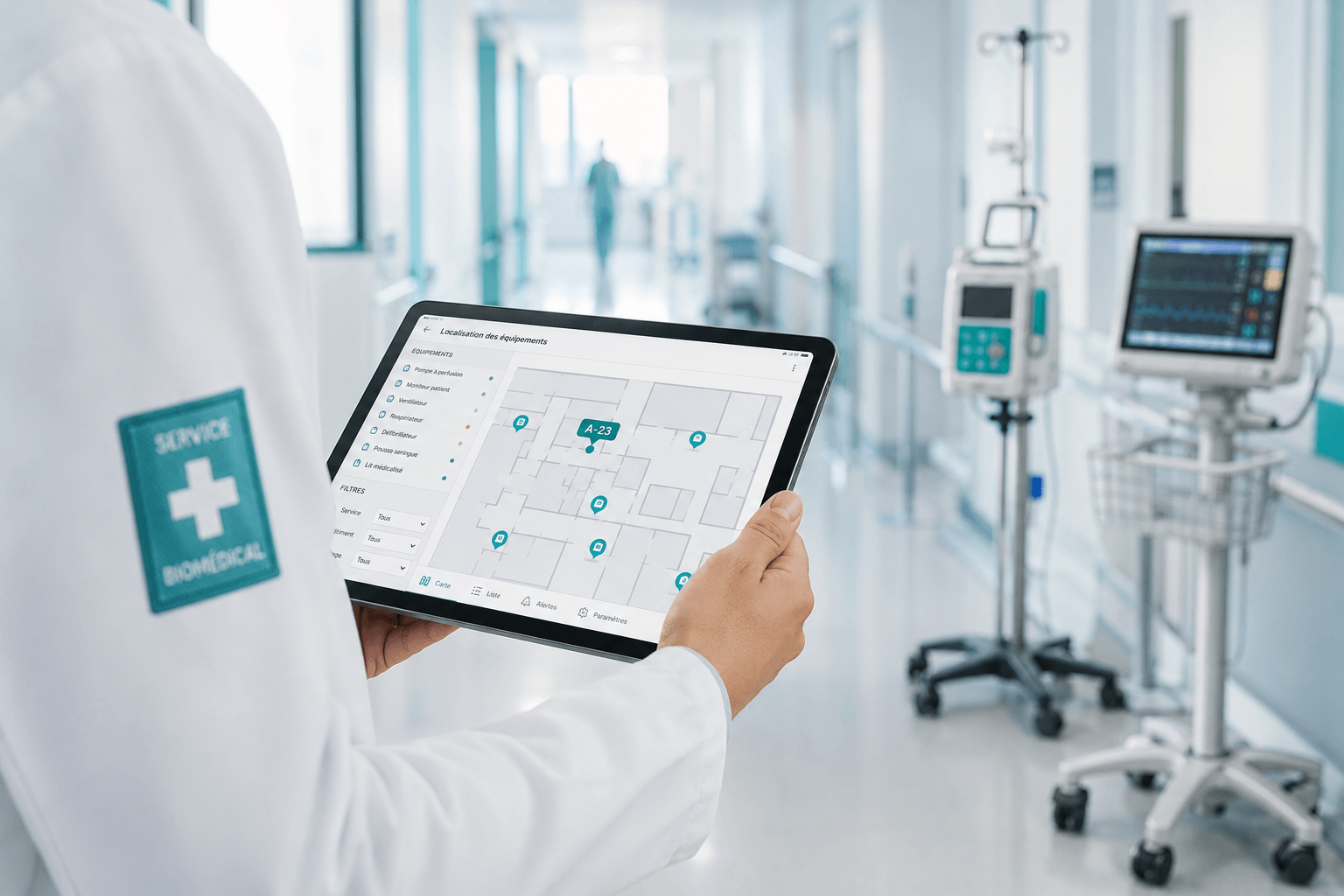
Locate infusion pumps, monitors, ultrasound scanners, wheelchairs and computers on wheels across all your sites, from a single platform. A Bluetooth tag on the equipment, your existing Cisco Meraki or Aruba Wi-Fi (or TRAKmy anchors) as sensors. Your teams stop searching.
looking for equipment
of the mobile fleet
one single platform
Assets tracked
Which medical equipment
can be located?
Short answer: any mobile asset that can be moved, hoarded or lost between departments can be located with a TRAKmy BLE tag: biomedical equipment, care equipment and IT hardware. The tag is compact, standalone and fitted in seconds.
The challenges
Why track the medical equipment
of a healthcare facility?
Short answer: without visibility over the mobile fleet, clinical time is spent searching, purchases are duplicated, and equipment sits idle in one department while another is short of it. Tracking turns that search into fleet, stock and maintenance management.
Equipment that cannot be found at the worst moment
A syringe pump nowhere to be found, a wheelchair moved to help out elsewhere: time spent looking for mobile equipment is clinical and technical time lost.
Duplicate purchases and overstock
When a device cannot be found, another one is bought. The fleet grows without anyone knowing the real utilisation rate. Several studies put the utilisation of mobile fleets below 50%, where 80% would be achievable.
Equipment hoarded by departments
Shared equipment sits idle in one department while another is short of it. Informal retention of equipment outside central stores creates tension between departments.
Time-consuming inventories and maintenance
The annual inventory and the tracking of regulatory checks are still done by hand, building by building, across several sites, with no consolidated view.
Measurable impact
The cost is not the spend:
it is what you stop losing
Short answer: the value of the solution is measured by what it stops you losing, not by what it costs. Avoiding a handful of lost devices a year and reducing overstock is enough to cover the subscription across all your sites.
Sources: study on real-time tracking of medical devices, arXiv 2303.01151 (2023), which puts fleet utilisation below 50% against a target of 80%; Le Quotidien du Médecin (published February 2026) for the €280,000 saved by Montpellier University Hospital, in France, since April 2024. These orders of magnitude are indicative and should be calibrated with your own facility's figures.
How it works
How does indoor tracking of
medical equipment work?
Short answer: a BLE tag on the equipment, a detection infrastructure (your existing Wi-Fi or NB-IoT anchors), and a platform that locates by geofence. Three steps, with no heavy network to deploy.
Tag the assets
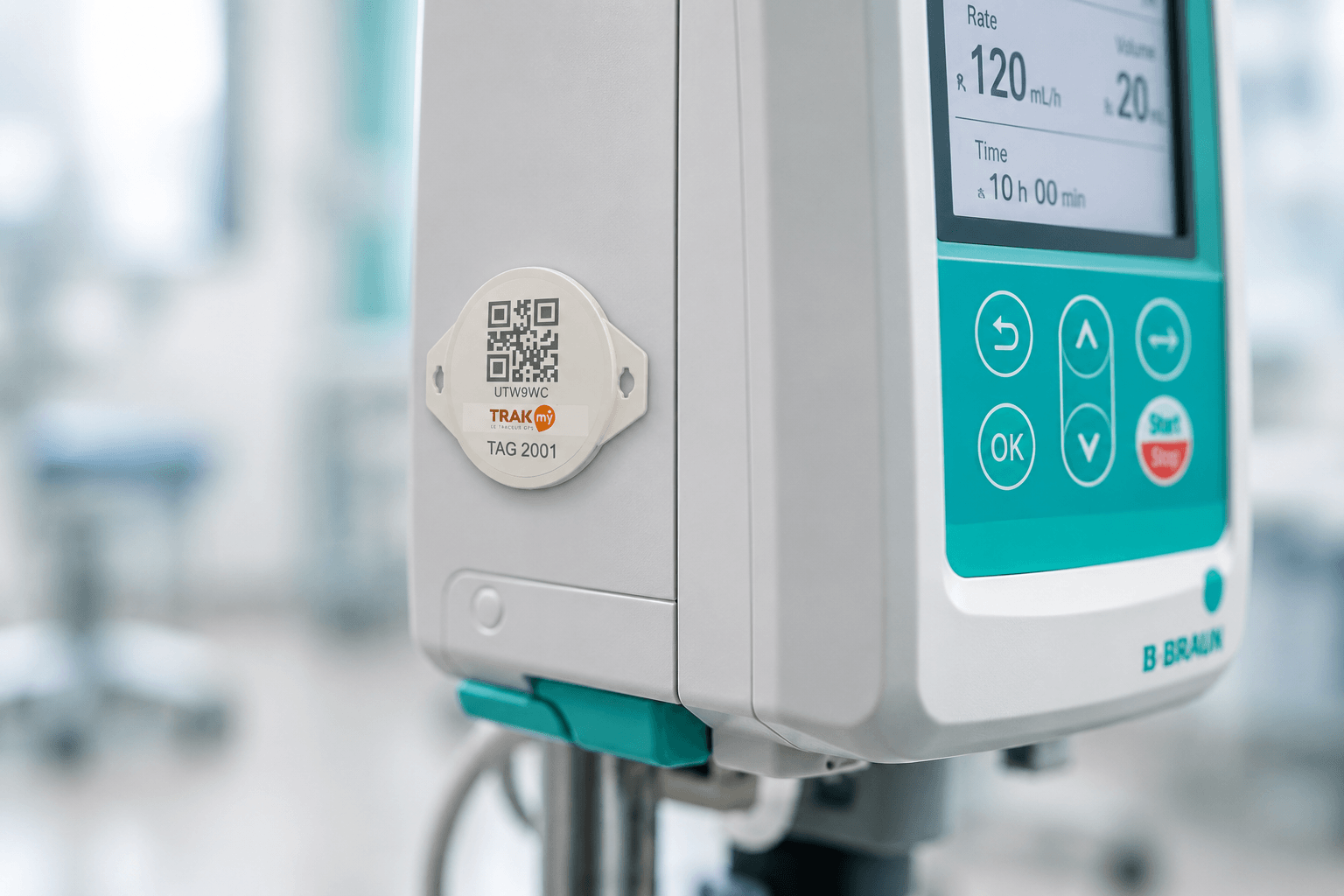
A TAG 2001 Bluetooth Low Energy tag is fixed to each item of equipment, then paired with the asset in the mobile app (scan the tag's QR code plus the asset identifier).
Pick up the signal
The tag broadcasts over BLE. It is heard by your existing Wi-Fi access points (Cisco Meraki, Aruba) or by TRAKmy anchors (ZA 3515, GEOBEACON) that report detections over NB-IoT.
The platform locates and acts
Every asset is attached to a geofence (department, floor, building, site). Map, search, stock per zone, exit alerts, utilisation and maintenance KPIs, across all your sites.
The right level, in the right place
Which level of indoor accuracy
should you choose?
Short answer: for most hospital use cases, knowing which department, floor or building an asset is in is enough. Existing Wi-Fi or zone anchors meet that need. High accuracy is reserved for critical areas.
High accuracy is deployed only where it is needed (an operating theatre, a store of high-value equipment). Everywhere else, existing Wi-Fi or zone anchors give the best accuracy-to-cost ratio.
Two deployment scenarios
Reuse the existing Wi-Fi
or deploy dedicated anchors?
Short answer: the tag and its platform subscription are the same in both cases. Only the infrastructure layer changes: your existing Wi-Fi access points, or standalone TRAKmy anchors. Both coexist in the same platform and across all your sites.
Scenario A: reuse your Wi-Fi access points
Your existing Cisco Meraki or Aruba access points act as BLE scanners. No infrastructure hardware to buy or to wire.
Scenario B: dedicated TRAKmy anchors
Standalone anchors (ZA 3515, GEOBEACON) are installed to scan continuously and report over NB-IoT, independently of the hospital's IT network.
Recommendation: start with scenario A where the Wi-Fi is already compatible (fast proof of value), then add scenario B in uncovered or critical areas. The Professional plan handles geofences, stock dashboards and sensors; the Analytics plan adds utilisation and maintenance KPIs.
Management 1
Map, geofences
and automatic inventory
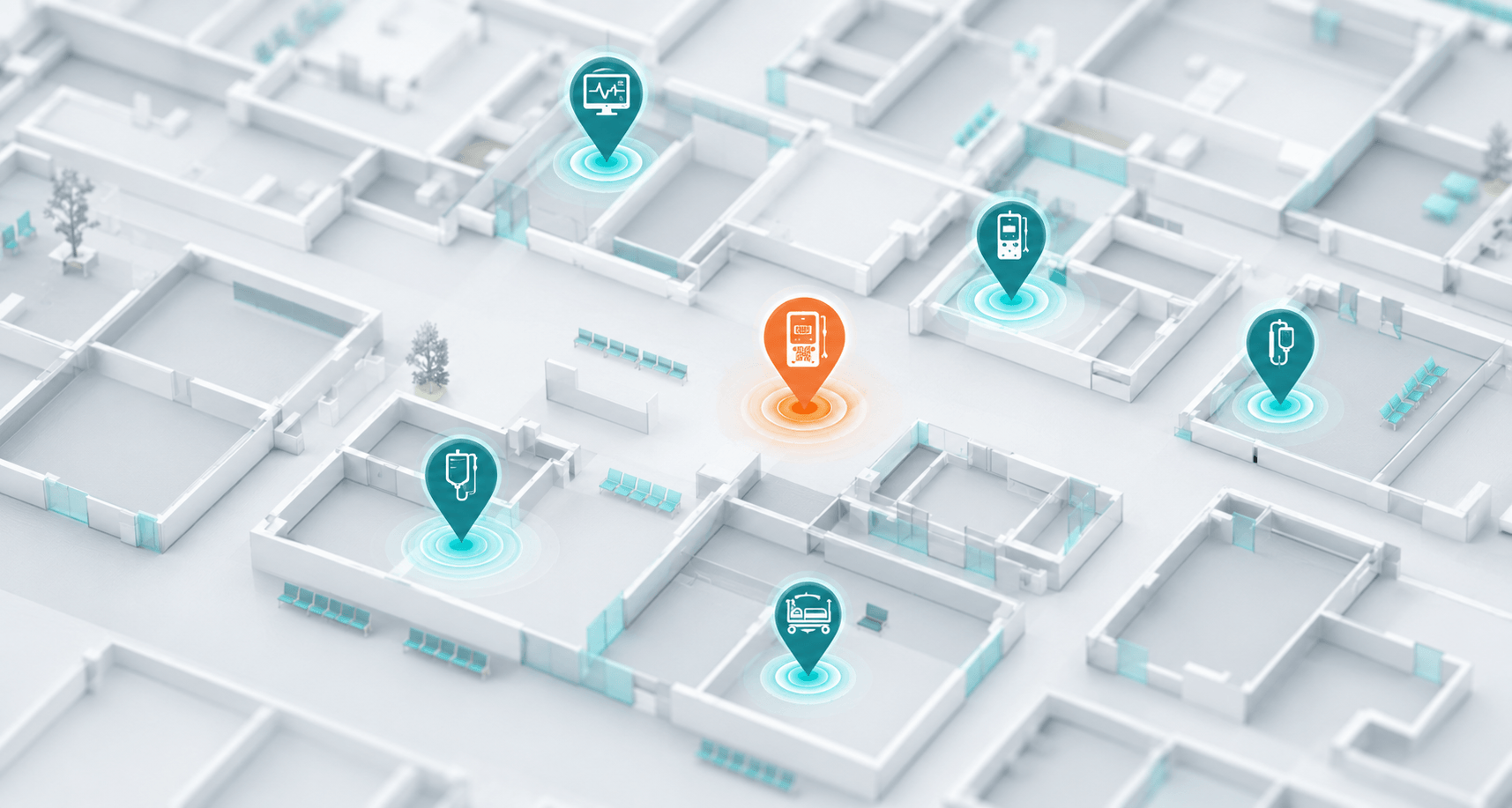
Short answer: every asset is attached to a geofence (department, floor, building, site). The platform shows its last known position and automatically lists the assets present in each zone, with no need to walk the buildings.
An asset map across all sites
The last known position of every item of equipment, filterable by site, department or asset type. Live views and statistics per geofence.
Instant inventory and search
Take the inventory of a zone without walking it, or find an asset in seconds using the BLE proximity guidance in the mobile app.
Alerts when an asset leaves a zone or a site
Be notified when an asset leaves a department, a building or a site, or stays too long outside its zone. By email, notification or API push.
Management 2
Less overstock,
more equipment available
Short answer: once you know the real utilisation rate of each device, you stop buying just to be safe. Under-used equipment is identified and redeployed, and overstock melts away. This is the highest-value lever.
Real utilisation rate per device
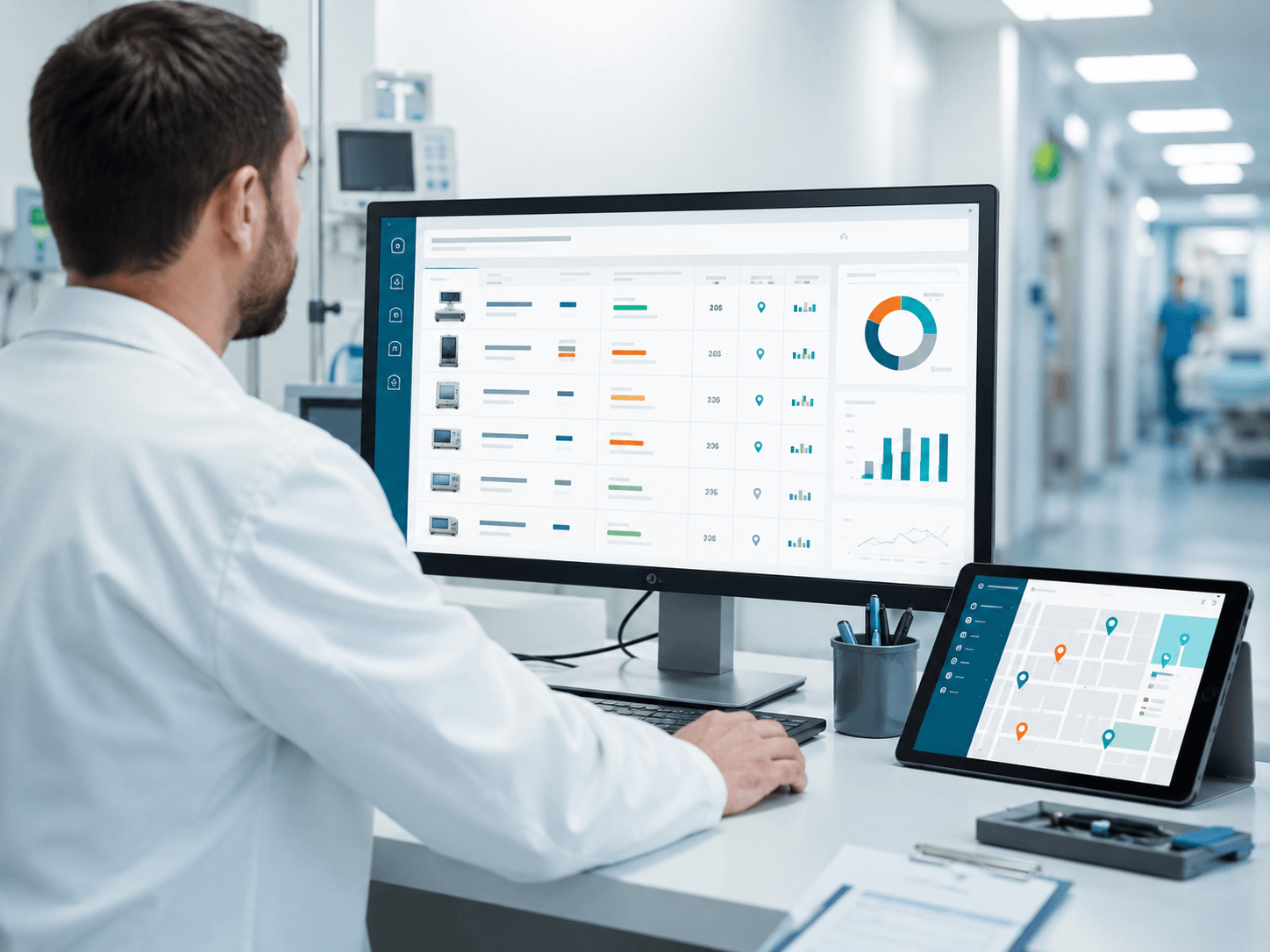
The Analytics plan calculates real utilisation per device and per fleet, to rationalise purchasing and redeploy idle equipment.
Stock management by zone
How many devices in each zone, how stock evolves, flows between zones, time spent. Hoarded equipment is identified and put back into circulation.
Maintenance and compliance
Maintenance programmes and dashboards per asset for tracking regulatory checks, with a located list of the devices to inspect.
Management 3
CMMS, biomedical
and HIS integration
Short answer: the TRAKmy platform integrates with your CMMS, your biomedical equipment management tool and your hospital information system (HIS) through open APIs (pull, push, MQTT), with no double entry.
Open pull / push / MQTT APIs
Location, inventory per geofence, alerts and KPIs feed into your business tools. Maintenance is based on located assets.
Reports and Power BI
Scheduled reports, custom dashboards and Power BI export with the Analytics plan, for management and biomedical teams alike.
A mobile app in the field
Asset list and map, BLE detection of nearby assets, guidance to a device and location check-in, on iOS and Android.
Ready to equip your fleet?
Free audit of your sites and your Wi-Fi infrastructure, personalised quote within 24 hours, phased deployment.
For every role
Who benefits from tracking
medical equipment?
Short answer: biomedical engineers, IT departments, fleet managers and clinical staff each gain, around a single platform: less searching, justified purchases, visible stock and more time given back to care.
Biomedical engineers & technicians
Locate a device in seconds, know the real utilisation rate to size purchases and maintenance contracts, and prepare inspection campaigns with a located device list.
IT departments
Track laptops, tablets and computers on wheels across every site, using the Wi-Fi already deployed (Cisco Meraki, Aruba), with no new network to build.
Fleet & logistics managers
A continuous view of stock per zone and per site, with no manual inventory. Identify idle equipment, put it back into circulation, follow flows between departments and buildings.
Clinical staff (indirect benefit)
Less time spent looking for equipment, more time for patients. The right equipment, available, in the right place, at the right time.
Designed for multi-site
One hospital group,
one platform
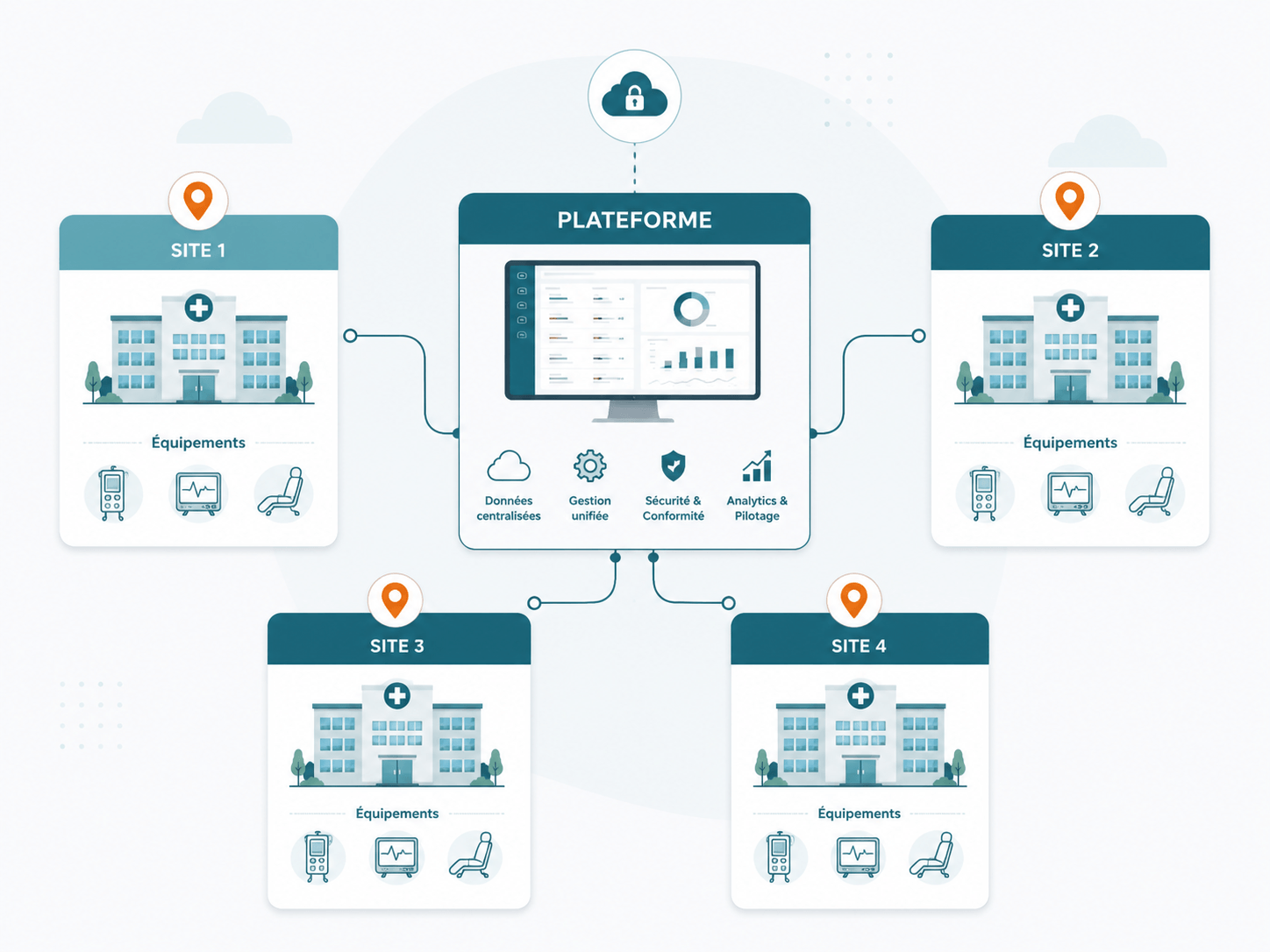
Short answer: several facilities, dozens of buildings, but a single view. The hierarchical breakdown into geofences (site, building, floor, department) gives management a consolidated view and local teams filtered views.
Phased deployment, site by site
You can start where the Wi-Fi infrastructure is already compatible, then extend to the other sites in the same way, with no disruption for users.
Data hosted in Europe
Fine-grained access management by role and by user, a configurable retention period, in line with GDPR requirements.
GDPR and health data
The solution tracks equipment, not people, which limits the GDPR impact. Health data hosting requirements (HDS certification in France) and the facility's own specifications are scoped at the start of the project.
Frequently asked questions
Everything about tracking
medical equipment
How do you track medical equipment in a hospital?
A Bluetooth Low Energy tag (BLE tag) is fixed to each mobile item of medical equipment: infusion pump, monitor, portable ultrasound scanner, wheelchair, computer on wheels. The tag is picked up either by the facility's existing Wi-Fi access points (Cisco Meraki, Aruba) or by TRAKmy anchors (ZA 3515, GEOBEACON) that report positions over NB-IoT. The TRAKmy platform attaches each asset to a geofence (department, floor, building, site) and shows its last known position on a single map, across all your sites.
Can you reuse existing Wi-Fi (Cisco Meraki, Aruba) or do you need new infrastructure?
Both scenarios are possible. The TRAKmy platform uses your already deployed Wi-Fi access points (Cisco Meraki, Aruba) as BLE scanners, with no new cabling and no hardware to install: this is the lowest entry cost. Where Wi-Fi is absent or coverage is insufficient (stores, theatres, storage areas), standalone TRAKmy anchors (ZA 3515, GEOBEACON) are added; they scan continuously and report data over NB-IoT, independently of the hospital's IT network. Both approaches coexist in the same platform.
Which medical and IT equipment can be tracked with a BLE tag?
TRAKmy equips the entire mobile fleet: infusion and syringe pumps, monitors, portable ultrasound scanners, defibrillators, beds and wheelchairs, computers on wheels (COW), laptops, tablets and any asset that can be moved, hoarded or lost between departments. The TAG 2001 BLE tag is compact and standalone (up to 10 years of battery). For assets that travel outdoors or between sites (ambulances, loaned equipment), an NB-IoT and LTE-M GPS tracker such as the COMPACT takes over.
What level of indoor accuracy can you achieve?
Accuracy is adapted zone by zone. Existing Wi-Fi and zone anchors locate at building, floor or large-zone level, which is enough for most cases: knowing which department or floor an asset is on. Bluetooth geobeacons go down to a room or a zone of roughly 20 to 50 m. A high-accuracy trilateration infrastructure (roughly 1 to 3 m) is reserved for critical areas. High accuracy is only deployed where it is needed, to keep the cost under control.
Does the solution handle a multi-site hospital group?
Yes. The TRAKmy platform is multi-site by design. The hierarchical breakdown into geofences (site, building, floor, department) offers a consolidated view for management and views filtered by facility for local teams. Deployment can be phased, site by site, starting with the areas where Wi-Fi is already compatible. Role management (reader, editor, administrator) secures access.
Is tracking medical equipment GDPR compliant, and what about health data hosting?
The solution tracks equipment, not people: the tags are fitted to devices, which limits the GDPR impact. Data is hosted in Europe, with fine-grained access management by role and a configurable retention period, in line with GDPR requirements. Health data hosting (HDS certification in France) and the requirements set out in the facility's own specifications are scoped at the start of the project.
Can the data be integrated into our CMMS, biomedical management tool or HIS?
Yes. The TRAKmy platform provides open APIs (pull, push, MQTT) to integrate with your CMMS, your biomedical fleet management tool or your hospital information system (HIS). Location, inventory per geofence, utilisation KPIs and maintenance programmes feed into your tools, with no double entry. The Analytics plan adds utilisation dashboards and Power BI export.
The hardware
Which TRAKmy products
for a healthcare facility?
Short answer: a BLE tag on each asset, a detection infrastructure (anchors or existing Wi-Fi), and an NB-IoT GPS tracker for assets that leave the building or move between sites.
Indoor · Tag · Assets
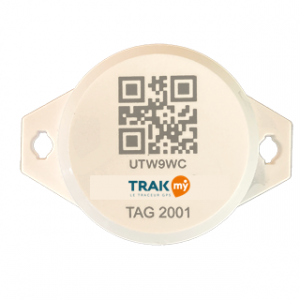
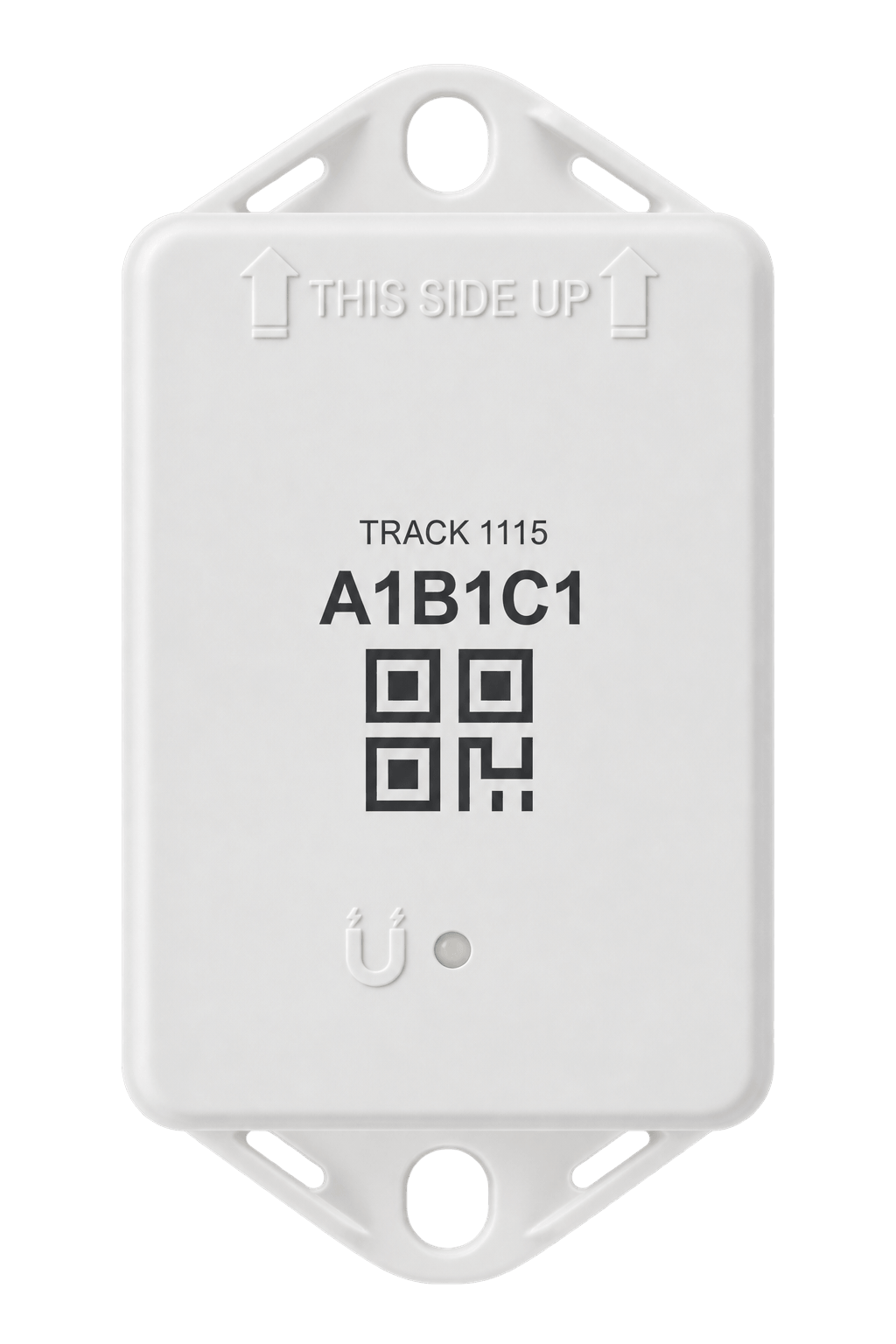
TAG 2001
A compact, standalone Bluetooth Low Energy tag fitted to each item of medical or IT equipment. Picked up by existing Wi-Fi or by TRAKmy anchors. The core of indoor positioning. IP67, CR2477 cell, up to 10 years.
Infrastructure · Continuous scanning
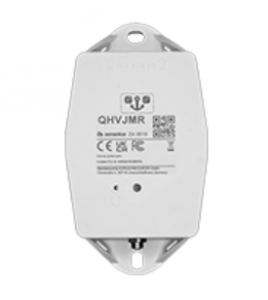
ZA 3515
A fixed NB-IoT / LTE-M zone anchor: it scans BLE tags (up to 2,000) and reports positions without depending on the hospital's IT network. Mains powered or with backup battery, for areas where Wi-Fi is absent or insufficient.
Infrastructure · Plug & play
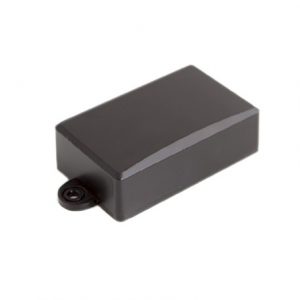
GEOBEACON
A plug-and-play Bluetooth anchor for accurate indoor positioning with no Wi-Fi infrastructure. Compatible with every TRAKmy tracker and BLE tag. Ideal for qualifying a room, a theatre or a storage area.
Outdoor · Between sites · NB-IoT + LTE-M
COMPACT
A dual-network NB-IoT and LTE-M GPS tracker for assets that leave the building or move between sites (loaned equipment, transport, logistics). GPS plus Wi-Fi plus BLE, 5 built-in sensors including temperature, replaceable battery pack, IP68 certified, 3 to 8 years of battery life.
The lowest entry cost
We reuse the existing Wi-Fi infrastructure (Cisco Meraki, Aruba) rather than imposing a heavy hardware deployment.
The right accuracy in the right place
From building level to the metre, according to how critical each zone is. You only pay for high accuracy where it counts.
Far more than positioning
Stock, real utilisation, maintenance, alerts and reporting in a single platform (the Professional and Analytics plans)).
Scalable and open
Pull, push and MQTT APIs to integrate with your CMMS, biomedical management and HIS. Multi-site by design.
Getting started
Book your demo
on a pilot site
We assess the compatibility of your existing Wi-Fi with your teams and define the right level of accuracy for each zone.
TRAKmy resources
Going further on
professional asset tracking
B2B
Professional geolocation
An overview of TRAKmy GPS and BLE solutions for fleets, asset stocks and business services.
Platform
Professional plan
Geofences, stock dashboards, BLE sensors, preconfigured alerts and API integration: the foundation for an equipment fleet.
Platform
Analytics plan
Real utilisation KPIs, maintenance programmes and Power BI export: the lever against overstock and loss.
Product
COMPACT GPS tracker
A compact NB-IoT and LTE-M tracker for assets that move outdoors or between sites. GPS, Wi-Fi and BLE, IP68.
Product
ULTRA N GPS tracker
The rugged outdoor tracker for exposed assets, long battery life, certified IP68 / IP69K for demanding conditions.
Technical
How does a tracker work?
The GPS, NB-IoT, Wi-Fi and BLE technologies behind accurate positioning of your assets, indoors and outdoors.
Legal
Legality and GDPR
The legal framework for tracking professional equipment: information, purpose, retention and compliance.
Industry
GPS tracker for construction
The sister solution for site machinery, skips and tools: anti-theft, inventory and ERP integration.
Industry
Logistics & transport
Tracking trailers, containers, pallets and returnable equipment for your transport and logistics operations.