Guides to professional asset tracking
8 free guides & white papers
GDPR compliance, return on investment, site theft prevention, supply chain, choosing the right tracker: our guides answer the real questions professionals ask when deploying a tracking solution. Free download, PDF format, no account needed.
expert
no account
immediate
TRAKmy library
Practical resources to succeed
in your tracking project
In short: deploying a B2B tracking solution raises three recurring questions — is it lawful, is it profitable, and which technology to choose. These 8 guides address each of them: from the GDPR framework to the ROI calculation, including the choice between NB-IoT and LTE-M depending on your assets. Each guide comes from our experience with more than 400 companies and over 100,000 connected assets.
Compliance & change management
Tracking within employment law and getting your teams to adopt the tool
In short: tracking a vehicle or an asset used by an employee is lawful provided the GDPR is respected — declared purpose, proportionality, prior information of employee representatives and of the employees themselves. These two guides cover both the legal framework and the human side of a deployment. They are written for French law; the principles apply across the EU, the procedures do not.
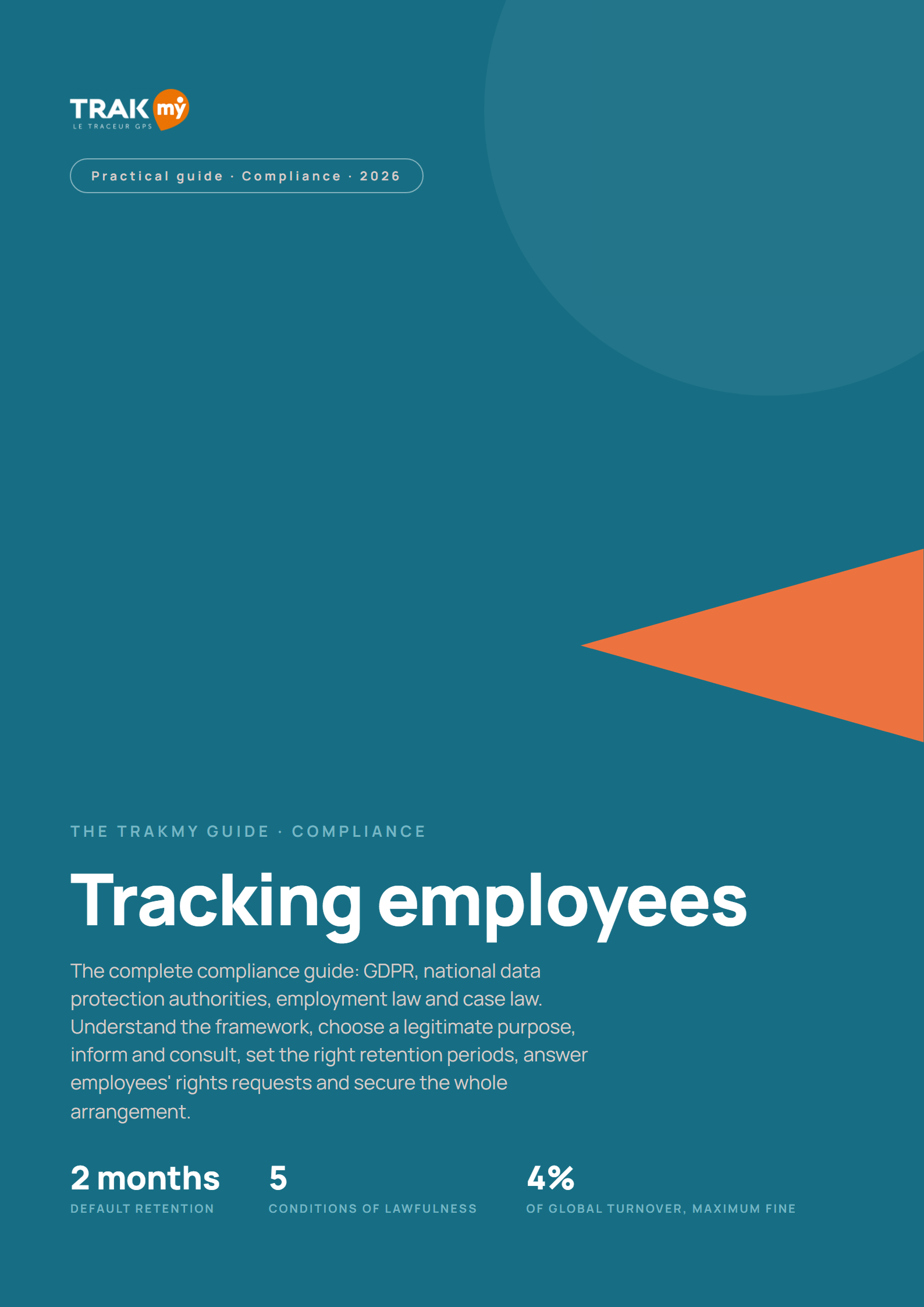
Employee tracking: the compliance guide
The full legal framework: authorised purposes, GDPR, consultation of employee representatives, employee rights and retention periods (2 months / 1 year / 5 years). The pitfalls that get a dismissal overturned or evidence thrown out.
- Employee information notice template
- A three-step balancing method
- A compliance checklist to tick off
- 3 practical cases + FAQ + glossary
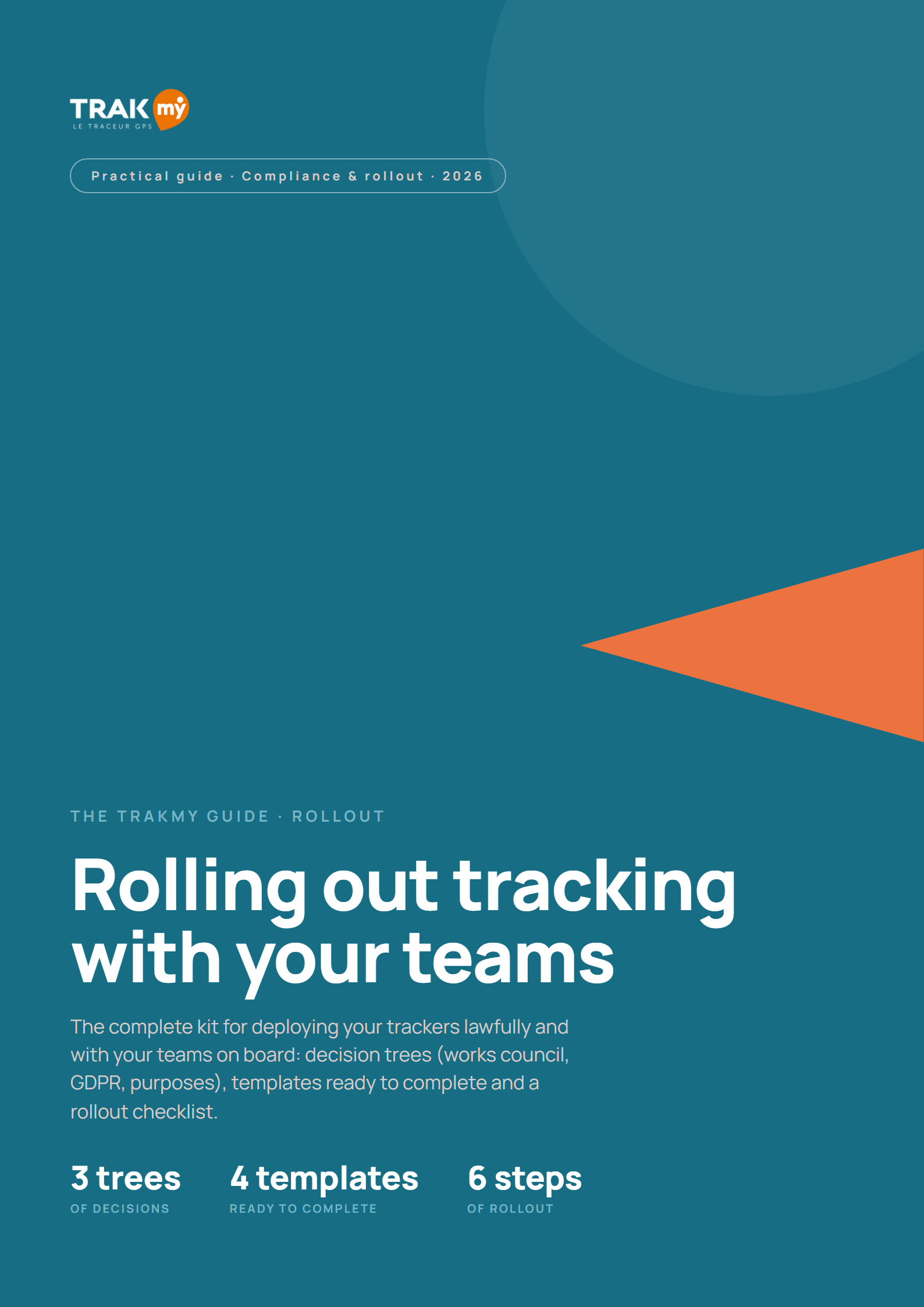
Rolling out tracking with your teams
The complete kit to deploy your trackers lawfully and with your teams on board: compliance and change management handled together, with tools you can use straight away.
- 3 decision trees (employee representatives, GDPR, use case)
- 4 ready-to-complete templates (contract amendment, letter, notice to employee representatives, register)
- A 6-step deployment path
- A deployment checklist to tick off
Choosing, costing & justifying
Comparing technologies, building the business case and calculating the return on investment
In short: the right choice depends on your assets. NB-IoT offers 5 to 10 years of battery life for standalone assets with no power supply, a hardwired cellular tracker provides real-time tracking on powered vehicles, and LTE-M covers assets that are both static and mobile. These three guides help you decide and quantify the gains: equipment not lost, productivity, fuel and insurance premiums.
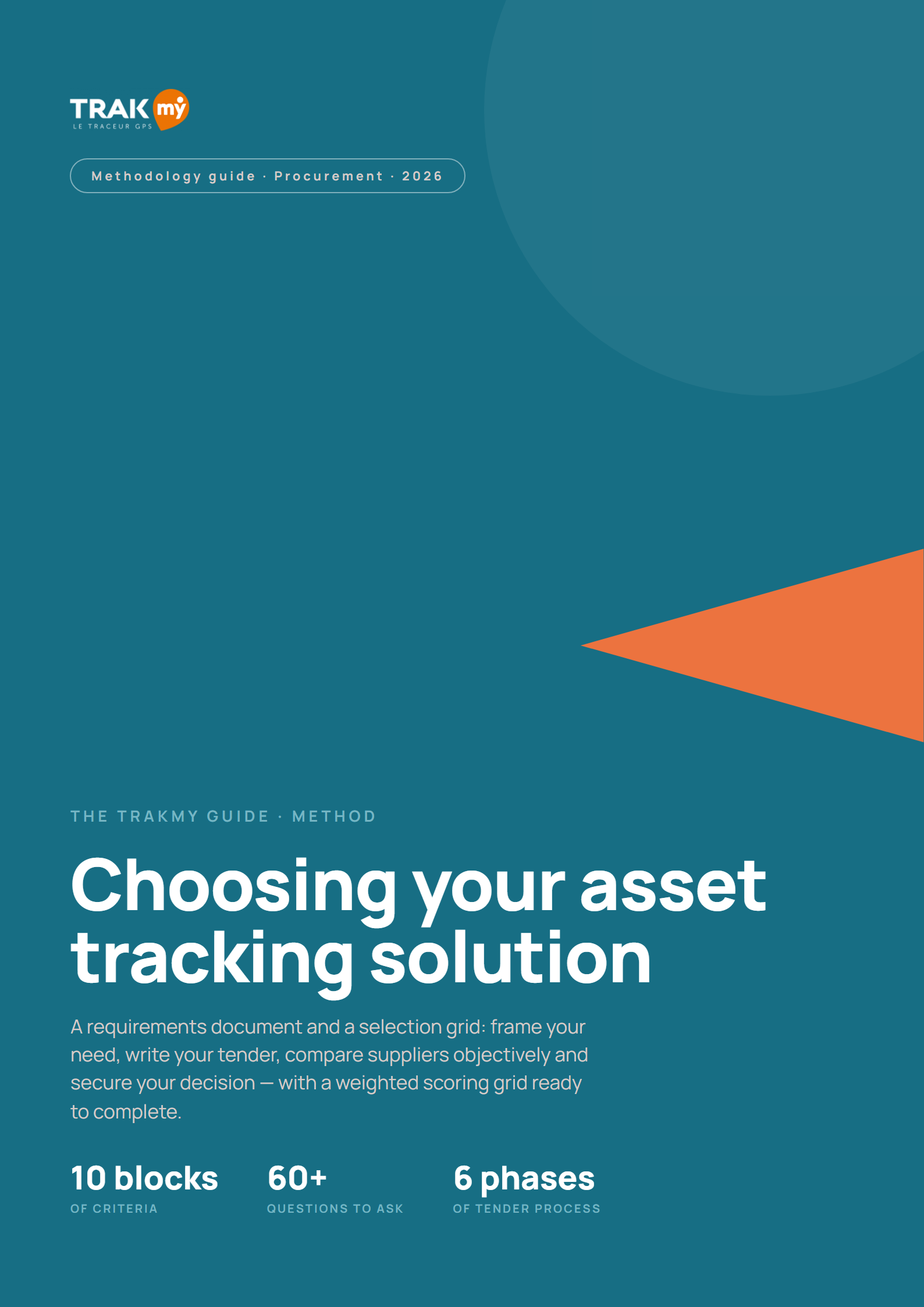
How to choose your tracking solution
Frame your requirement, write your tender and compare suppliers across 10 blocks of criteria, with evidence. An objective framework to compare, negotiate and decide with confidence, beyond the price of the hardware.
- A weighted scoring grid to fill in
- A supplier comparison radar
- A model specification (8 sections)
- A 6-phase tender process
- 7 operational checklists
- Network families: NB-IoT, LTE-M, cellular, LoRaWAN
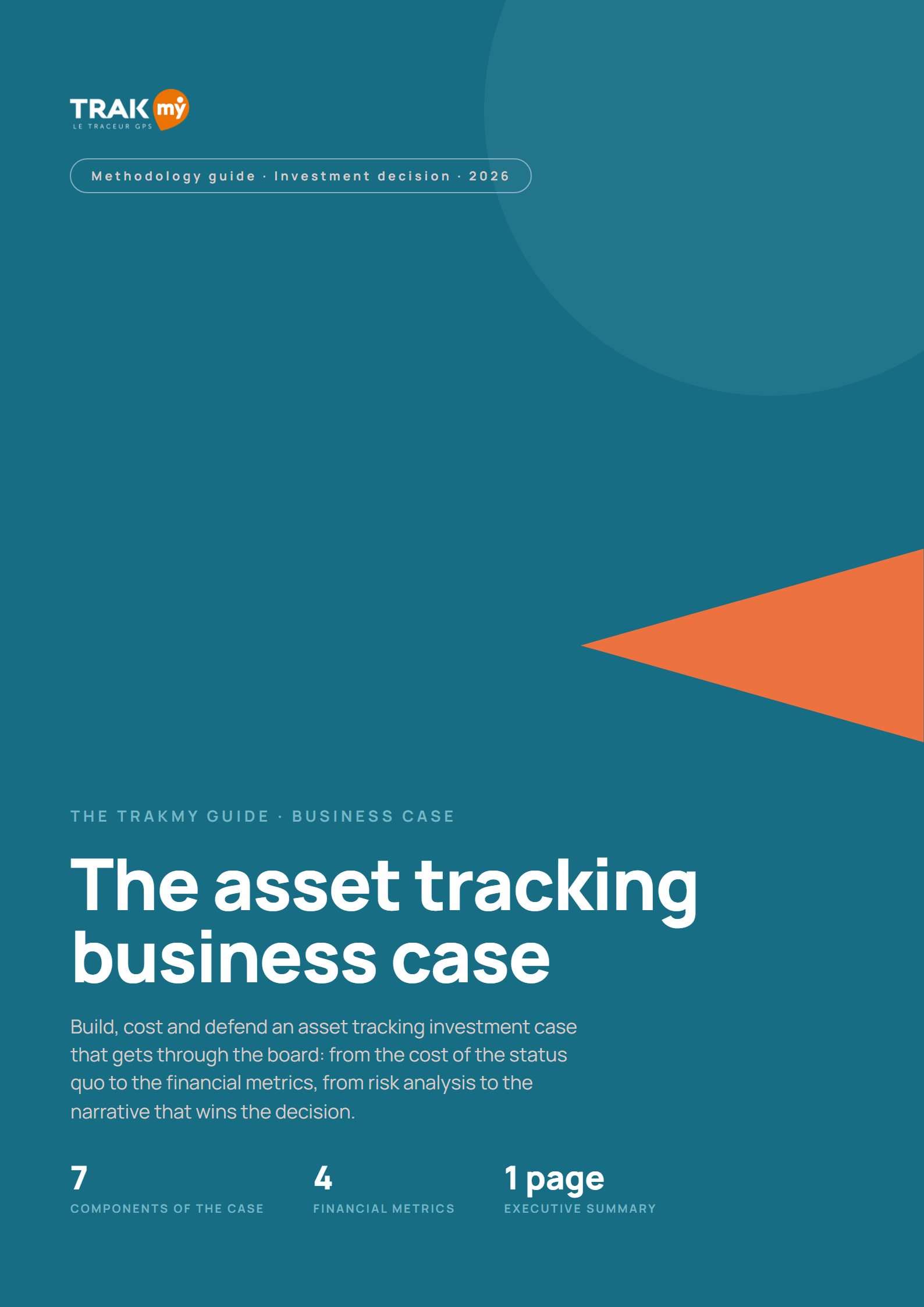
Business case: building the ROI of asset tracking
Build, cost and defend an investment case that gets through committee. The full structure: cost of the status quo, 5-year TCO, financial indicators and the narrative that wins the decision.
- A one-page executive summary template
- A quantified gains model (~€99,000/year)
- Cost of the status quo & 5-year TCO tables
- 4 indicators: ROI, payback, NPV, IRR
- Risk analysis + 3 scenarios
- Answers to the 5 recurring objections
Optimising the supply chain
How asset tracking reduces losses, smooths your logistics flows and turns into concrete gains. The optimisation levers sector by sector: logistics, waste, construction, transport, cold chain.
- A step-by-step ROI calculation method
- Return summary (~€273,000/year)
- Indicators: presence, downtime, movements
- An industry use case + the 4 IoT pillars
- A due diligence checklist
Field, data & market
Securing site equipment, using your data and understanding the tracking market
In short: beyond position alone, tracking becomes a security and decision-support tool. These guides cover anti-theft protection for construction machinery, the use of asset data through artificial intelligence (predictive maintenance, flow analysis), and the state of the market through our 2026 barometer.
Site theft prevention: protecting your machinery
Quantify the real cost of theft on site, map the risks and choose the right traceability solution for machinery, tools and materials. A guide written by integrators, not theorists.
- A sizing decision tree by asset type
- A complete ROI calculation (~€38,600/year, payback < 12 months)
- A 7-step deployment method
- A checklist of 12 supplier questions
- Risk mapping + 5 levers
Asset data & artificial intelligence
How to move from a connected fleet to clean, governed data ready to feed your AI models, your dashboards and your decisions. Because 85% of AI projects fail on the data, not the model.
- A 90-day roadmap
- A grid of the 6 quality dimensions
- An architecture diagram (API, MQTT)
- An “is my fleet AI-ready?” checklist
- The questions to ask your supplier
TRAKmy 2026 barometer of B2B asset tracking
The annual state of asset tracking in France: adoption, cost of theft, maturity by sector, technologies, ROI and 2026 trends. A benchmark to place your organisation and guide your equipment decisions.
- A maturity self-assessment grid
- A 4-level maturity scale
- A network comparison table
- 4 ROI levers + 4 recommendations
- Sourced KPIs + a methodology note
Going further
Explore the TRAKmy solution
The guides set out the theory. Now discover the products, the industries and the articles that put it into practice.
A proven solution for every business, from the sole trader to the large group.
Standalone NB-IoT trackers, real-time hardwired tracking and the right platform plans.
Detailed analysis to go deeper on every subject covered in the guides.
Frequently asked questions
What you ask
about our guides
Are the TRAKmy guides really free?
Who are these guides for?
Is employee tracking lawful in France?
Which technology should you choose: NB-IoT or LTE-M?
How do you calculate the ROI of a tracking solution?
Do I have to be a TRAKmy customer to download the guides?
Put it into practice
A project in mind?
Let's talk it through
Our experts present the solution suited to your industry, your assets and your operational challenges — a personalised demonstration and pricing within 24 hours.